

Project 80
Updated: 10 November 2023
Location: Handsworth, Birmingham
Developer:
Midland Heart / Building Alliance / Birmingham City University
Number of units: 12 houses
Aim(s) of Project: Future Homes Standard
Construction method: Masonry - Insulated Cavity
Energy Compliance method: SAP 2013
Overheating compliance method: -
Construction start: -
Construction finish: September 2022

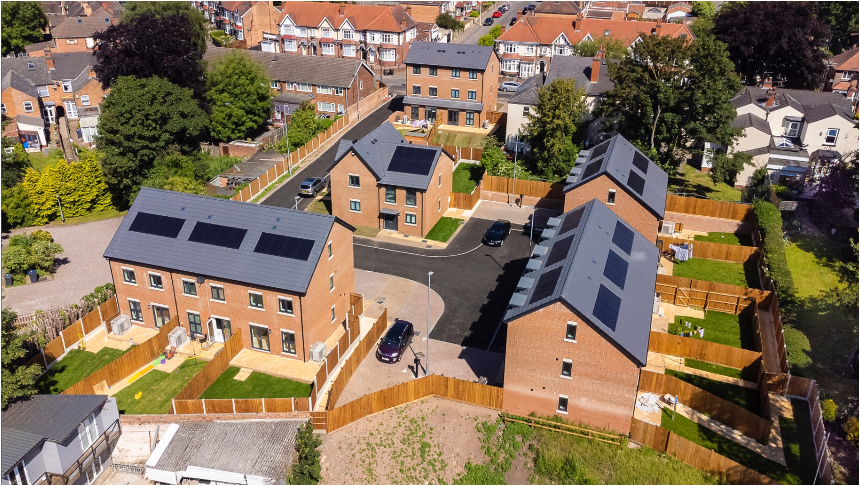
Overview of Project and Specification
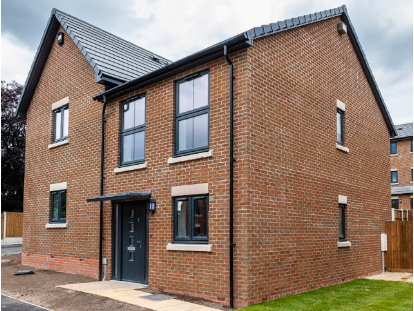
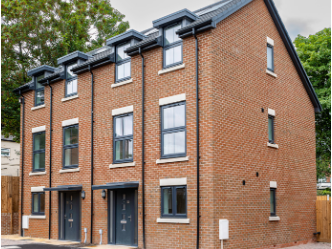
12 conventional house-types produced using three different masonry construction solutions to give an 80-90% reduction from 2013 regulations, and so comply with the Future Homes Standard.
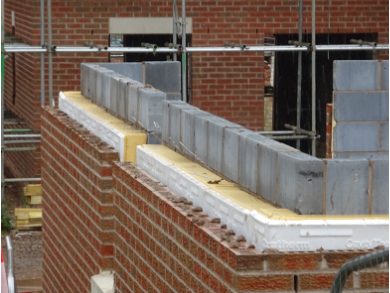
Cavities were 150mm (fully filled Xtratherm with a PIR core) with either a H+H aircrete block (with an airtight polymer spray) or Besblock Star Performer.
Design airtightness was either 1.5 m3/h/m2@50pa or 5 m3/h/m2@50pa.
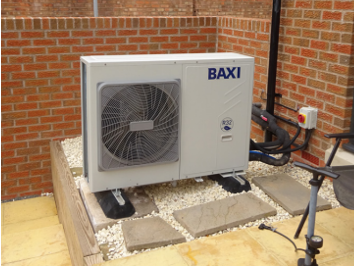
Heating was ASHP or direct electric.
Key learnings - highlights
- Occupant lifestyle is a key factor in achieving Future Homes Standard targets. More needs to be done to help occupants understand heat pumps, controls, ventilation and building performance.
- Apps for educating on indoor air quality and targeted messaging positively change the energy use of the homes.
- Controls need to be more user friendly. Handover must be carefully managed. Occupants need more information.
- Stakeholders, including home developers, equipment manufacturers and installers should work together to develop a joint strategy to help occupants use their heating and ventilation systems more effectively.
- Those maintaining the equipment have an opportunity to provide occupants with an annual refresher to improve their use of a heat pump.
- A ventilation strategy is needed to identify possible problems when floors, doors and windows are modified.
- The supply chain required to achieve the Future Homes Standard needs to be expanded and trained due to the complexity of the changes which cannot be understood without experience. This supply chain needs to include maintenance as an essential service.
- More comprehensive monitoring of equipment and house environments is needed to better understand operations, but also to give feedback to occupants about how their lifestyles influence the performance of their homes.
Key learnings - construction
- These sort of wall compositions need to viewed as one system and require good buildable junction details. Brickwork contractors needed to be supported.
- Where it was used (to reduce air permeability) the polymer spray was accomplished successfully, but no one else can work in the house at the same time.
- The quality control of the fabric needs to be recognised within contracts that reflect the difficulties of wall composition.
- Glazing decisions are not purely based on performance, but also on weight, availability, security and maintenance,
- The M&E contractors were unfamiliar with some of the systems and needed valuable support from the heat pump manufacturers. The M&E contractor subcontracted the PV system which led to disconnects and the need for further co-ordination. Finding space in existing house layouts for hot water cylinders can be challenging.
- When installed the MVHR unit was placed in the loft and the duct work ran through the I-joists.
- Heat pump location, security and the installation of insulation/protection to pipework needs careful consideration. Common presentation of installation across manufacturers would be aid understanding and roll-out. Effective commissioning and on-going maintenance are essential. Contracts need to encourage meeting design performance.
- Controls need to be more user friendly. Handover must be carefully managed. Occupants need more information.
- Ventilation systems need to have a test certificate.
- Ventilation pathways, especially under doors need to be maintained (e.g. when fitting floors).
Performance evaluation
- Houses with heat pumps and PV worked to their design performance targets and achieved an estimated 65% reduction in carbon emissions compared to the use of a gas boiler. This percentage will rise as the electricity grid is decarbonised
- Heat pumps provided very comfortable conditions even in very cold periods
- Occupants found the added comfort a pleasure compared to the poor conditions experienced in their previous homes •
- Novel ventilation systems maintain good air quality. Total volatile organic compounds (TVOC) and fine particles (PM2.5) increased during cooking activity but subsided when it stopped
- The daily pattern of heating led to high energy use in most houses and lifestyle choices often put pressure on household environmental conditions. In the first-year occupants heated their homes to 22 Celsius but in subsequent years they leant to live at lower temperatures and became more confident with heating controls.
- Occupants are happy with their homes. Some residents reported that they no longer suffered from asthma since moving in.
- Occupants are struggling to understand how to use heat pumps efficiently despite, manuals webinars and visits. A bespoke user manual or app for houses built to the Future Homes Standard would help.
- Some occupants are opening windows all day. This appears to be because they lived in previous dwellings that were subject to mould. MVHR needs to be better understood by occupants.
- One resident commented on over-heating when, the outside temperature exceeded 30 Celsius.