
Future Homes Standard Explainer
A central repository for guidance, updates and resources to support Future Homes Standard implementation
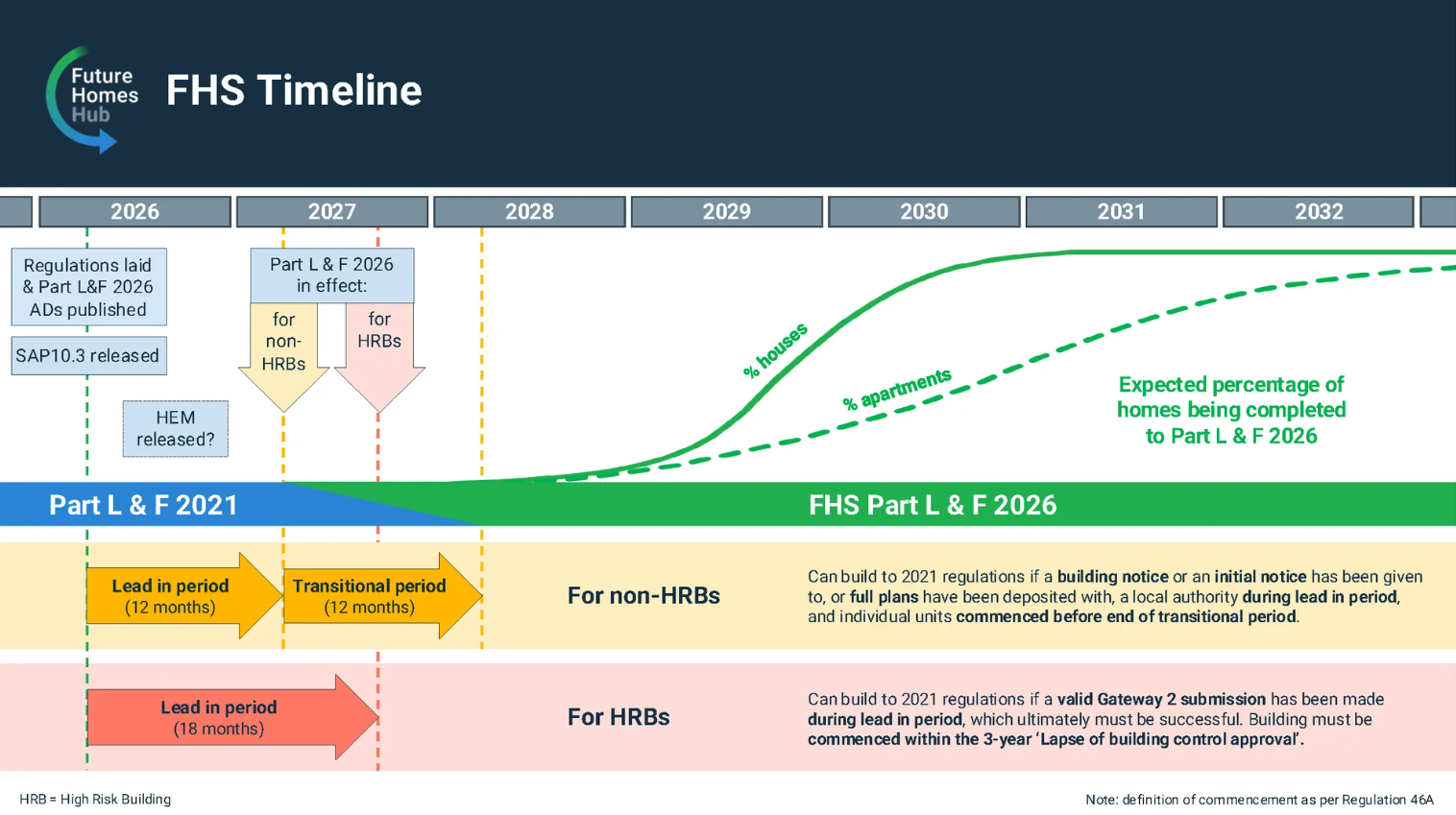
The Future Homes Standard is the name often used to describe combined updates of the Building Regulations Part L – Energy & greenhouse gas emissions (2026) and Part F – Ventilation (2026) published in March 2026.
For low to medium rise homes these new regulations apply in England from March 2027 with a 12-month transitional period. Higher Risk Buildings (HRBs) are treated differently with a longer 18 -month lead-in period and transitional period.
For more information on the transition - Click here
The changes will improve building energy efficiency and see the move away from gas boilers and other carbon-intensive heating. All new homes will then be 'zero carbon-ready', meaning that they will be zero carbon once the electricity grid has been decarbonised.
Implementation timeline
The headline changes to be aware of include:
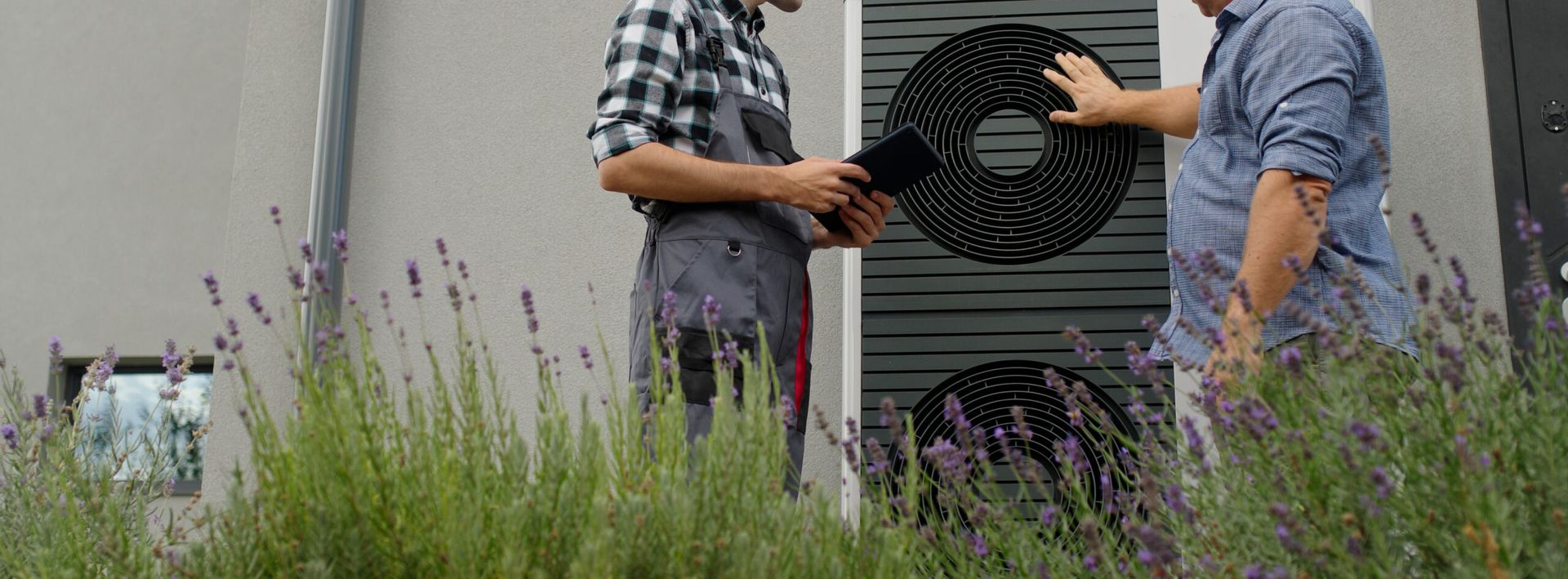
Transition from gas to low carbon heating systems - The carbon targets set by Part L 2026 will see the move away from gas boilers to all-electric heat pumps and low carbon heat networks, which means early discussions with local energy infrastructure providers are critical from the earliest project stages.
New Window & Door U-value conventions - Whilst the headline building fabric performance will be in many cases similar to Part L 2021 homes, the change in conventions for calculating window & door U-values could see some homebuilders having to upgrade their current insulation, thermal junctions and airtightness specifications.
Photovoltaics now a Functional Requirement - For the first time a proportion of on-site renewable electricity generation will be mandatory for the vast majority of low-rise homes and medium rise apartments (Non-Higher Risk Buildings e.g. less than 11 meters tall). The ability to export energy from homes will become increasingly important technically and from a consumer perspective.
Increased emphasis on construction build quality and commissioning – Homes being built exactly as-designed will play an even greater role in thermal comfort, energy bills and overall customer satisfaction. Heat pumps are less tolerant of underperforming building fabric than gas boilers, and more airtight homes need ventilation systems to perform effectively to ensure good indoor air quality.
Regulations and policy
Access official regulations and guidance
Need to know | Need to do
Resources by role




Future Homes Standard | 7 Essentials
The Future Homes Standard Essentials set out seven practical actions to help homebuilders de-risk delivery, improve performance, reduce costs and support customers as they transition to low-carbon living.
Sector collaboration
How industry groups are working together


Latest resources
FAQ’s
Contact the Hub
Submit a question
Become a member